
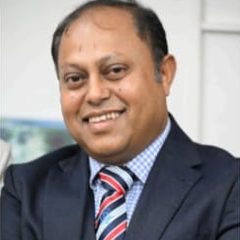
Professor Dr. Abdus Salam
Principal Investigator
Department of Chemistry, University of Dhaka
Pro-Vice-Chancellor (Academic), University of Dhaka
- 133 peer-reviewed articles 131 catalogued here
- 150+ students supervised 44 theses recorded here
- 34 h-index Google Scholar, Aug 2026
- 4,460 citations Google Scholar, Aug 2026
ORCID 0000-0002-5609-6828 asalam@du.ac.bd ResearchGate Google Scholar Institutional profile
A pioneer of atmospheric and environmental science in Bangladesh. Over three decades he has brought the country’s research in the field up to international standards, built two research observatories, one urban and one coastal, and worked to turn what they measure into practical change and better environmental policy for Bangladesh.
Career
-
since 2026
Pro-Vice-Chancellor (Academic)
University of Dhaka, from 15 April 2026
-
2025–2026
Chairman, Department of Mathematics
University of Dhaka
-
2024–2026
Dean, Faculty of Science
University of Dhaka
-
since 2014
Professor of Chemistry
Department of Chemistry, University of Dhaka
-
2011–2012
Visiting Scholarstudy
Department of Chemistry, York University, Toronto
-
2010–2014
Associate Professor
Department of Chemistry, University of Dhaka
-
2009–2010
Postdoctoral researcher, atmospheric chemistrystudy
Centre for Atmospheric Chemistry, York University, Toronto
-
2006–2010
Assistant Professor
Department of Chemistry, University of Dhaka
-
2005–2006
Lecturer
Department of Chemistry, University of Dhaka
-
2003–2005
Postdoctoral researcher, atmospheric sciencestudy
Dalhousie University, Halifax
-
2000–2003
PhD, atmospheric analytical chemistrystudy
Technical University of Vienna, with a post as project co-worker at its Institute of Analytical Chemistry
-
1996–2000
Analytical chemist
Pharmaceutical industry, Bangladesh
-
1994–1996
MSc, physical-inorganic chemistrystudy
University of Dhaka
-
1989–1994
BSc, chemistrystudy
University of Dhaka
Recognition
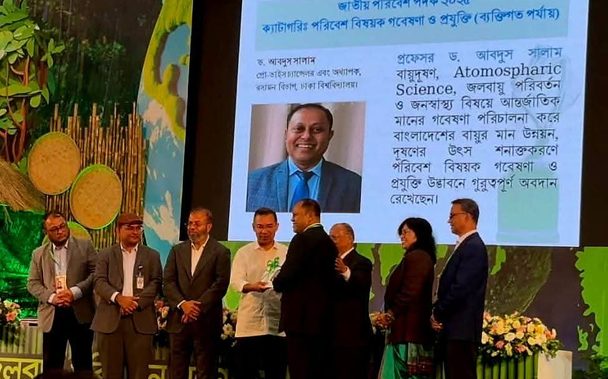
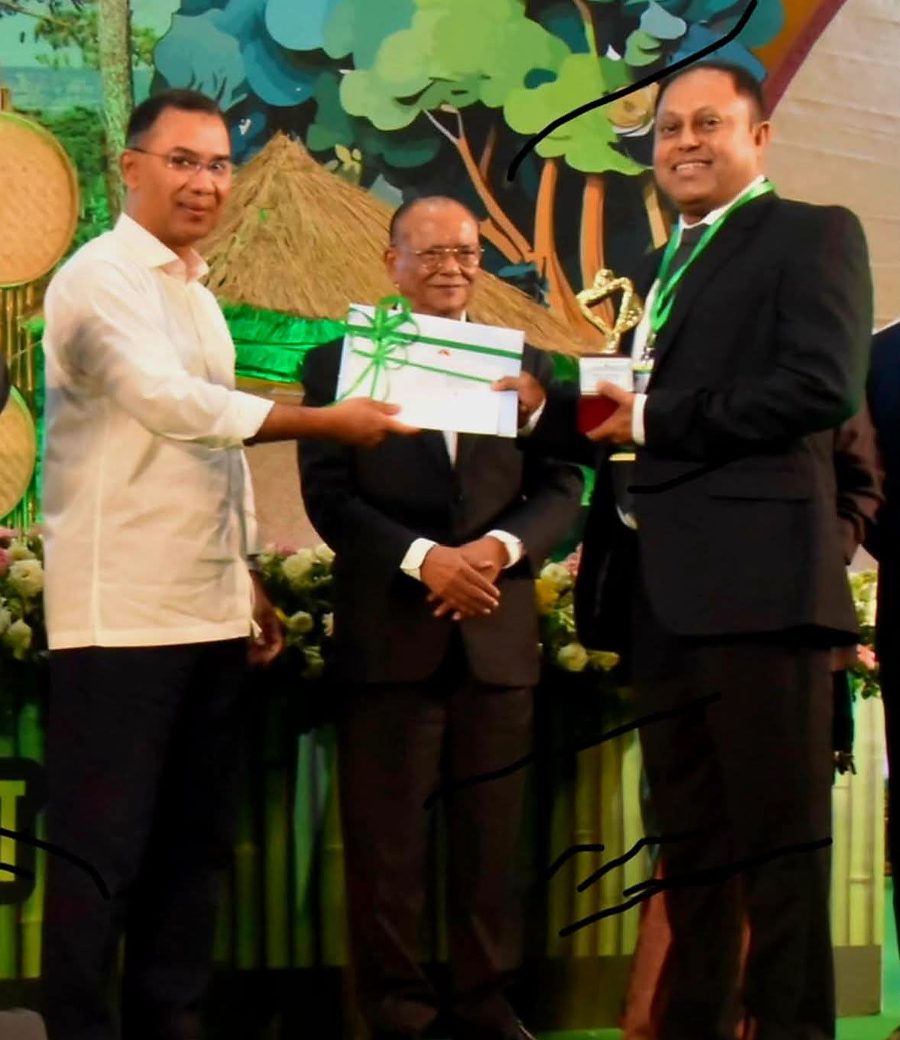
He is also listed among the top 2% of scientists worldwide in the Stanford University and Elsevier ranking for 2025.
Roles beyond the laboratory
- Co-Chair 2023–2026 International Global Atmospheric Chemistry (IGAC). He served on its Scientific Steering Committee from 2019
- Committee member 2024–2027 Global Health Oversight Committee, Health Effects Institute, Boston
- Associate Editor 2020–2026 Frontiers in Sustainable Cities, climate change section
- Steering committee Health Investigation and Air Sensing for Asian Pollution (Hi-ASAP)
- Member IGAC Monsoon Asia and Oceania Networking Group (IGAC-MANGO), and the executive committee of the Aerosol Composition and Asian Monsoon (ACAM) workshop
- Societies American Geophysical Union · European Geosciences Union · Canadian Chemical Society · Bangladesh Chemical Society
In the news and at conferences
Event
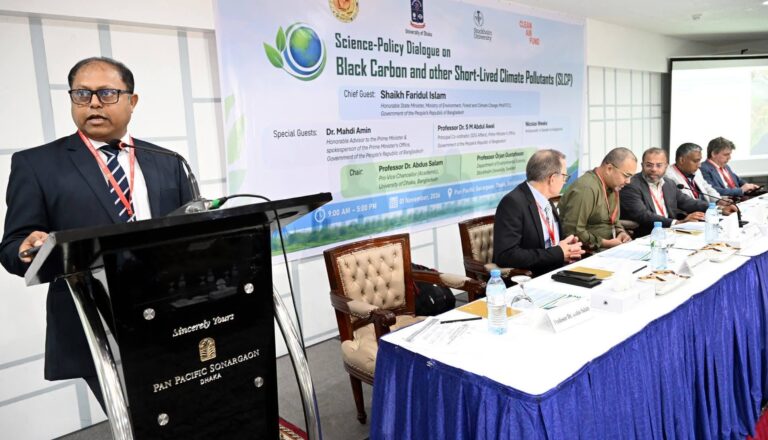
Science-Policy Dialogue on Black Carbon and Short-Lived Climate Pollutants, Dhaka
The University of Dhaka and Stockholm University, with the Clean Air Fund, brought scientists, policymakers and government representatives together on black carbon and other short-lived climate pollutants. Professor Salam co-chaired.
Output
Papers published each year, and how often they have been cited.
What the work is about
His papers, grouped by research theme.
Where
Dhaka, the three cities where he studied and worked, and where his co-authors are based. Many co-authors on large papers are fellow members of global measurement networks rather than direct collaborators.
- Leads the laboratory
- Studied or held a post
- Works with directly
- Shares global network papers
Leads the laboratory
- Dhaka, Bangladesh
- University of Dhaka. BSc and MSc here, then Lecturer through to Professor, Dean of Science, and Pro-Vice-Chancellor. The laboratory is here.
Studied or held a post
- Vienna, Austria
- PhD in atmospheric analytical chemistry, Technical University of Vienna, 2000 to 2003.
- Halifax, Canada
- Postdoctoral researcher in atmospheric science, Dalhousie University, 2003 to 2005.
- Toronto, Canada
- Postdoctoral researcher at the Centre for Atmospheric Chemistry, York University, 2009 to 2010, and Visiting Scholar there 2011 to 2012.
Works with directly
- Stockholm, Sweden
- Örjan Gustafsson, Stockholm University. 6 papers together, 5 of them with fewer than fifteen authors.
- Bengaluru, India
- Krishnakant Budhavant, Indian Institute of Science. 7 papers together, 6 of them with fewer than fifteen authors.
- Islamabad, Pakistan
- Muhammad Fahim Khokhar, National University of Sciences and Technology. 7 papers together, 5 of them with fewer than fifteen authors.
- Albany, United States
- Md Aynul Bari, University at Albany, State University of New York. 4 papers together, every one with a small author list.
Shares global network papers
- Rehovot
- Yinon Rudich, Weizmann Institute of Science. 7 papers together, all of them large multi-institution ones.
- Vancouver, Canada
- Michael Brauer, University of British Columbia. 7 papers together, all of them large multi-institution ones.
- Atlanta, United States
- Yang Liu, Emory University. 4 papers together, all of them large multi-institution ones.
- Kanpur, India
- Sachchida N. Tripathi, Indian Institute of Technology Kanpur. 7 papers together, all of them large multi-institution ones.
- Pretoria, South Africa
- Rebecca M. Garland, University of Pretoria. 6 papers together, all of them large multi-institution ones.
- Seoul, South Korea
- Jhoon Kim, Yonsei University. 4 papers together, all of them large multi-institution ones.
- Melbourne, Australia
- Robyn Schofield, The University of Melbourne. 3 papers together, all of them large multi-institution ones.
- Abu Dhabi, United Arab Emirates
- Diana Francis, Khalifa University. 2 papers together, all of them large multi-institution ones.
Research
Urban air quality, traffic and brick kiln emissions, biomass burning, aerosol chemical composition, dust aerosols, black and brown carbon, trace gases, aqueous atmospheric chemistry, low-cost sensors, human health risk assessment, climate change and ecosystem impacts.
His published work runs across every strand the laboratory works on: urban and indoor air quality, carbonaceous aerosols, source apportionment and emission sources, trace and heavy metals, and mitigation and filtration materials. It begins with ice nucleation on mineral dust in the mid-2000s.
See also his publications, the theses he has supervised, and the laboratory’s collaborations.
From Professor Salam’s curriculum vitae, his University of Dhaka faculty page and the university’s Pro-Vice-Chancellor page. A smaller number under a figure shows how many are listed on this site so far.