
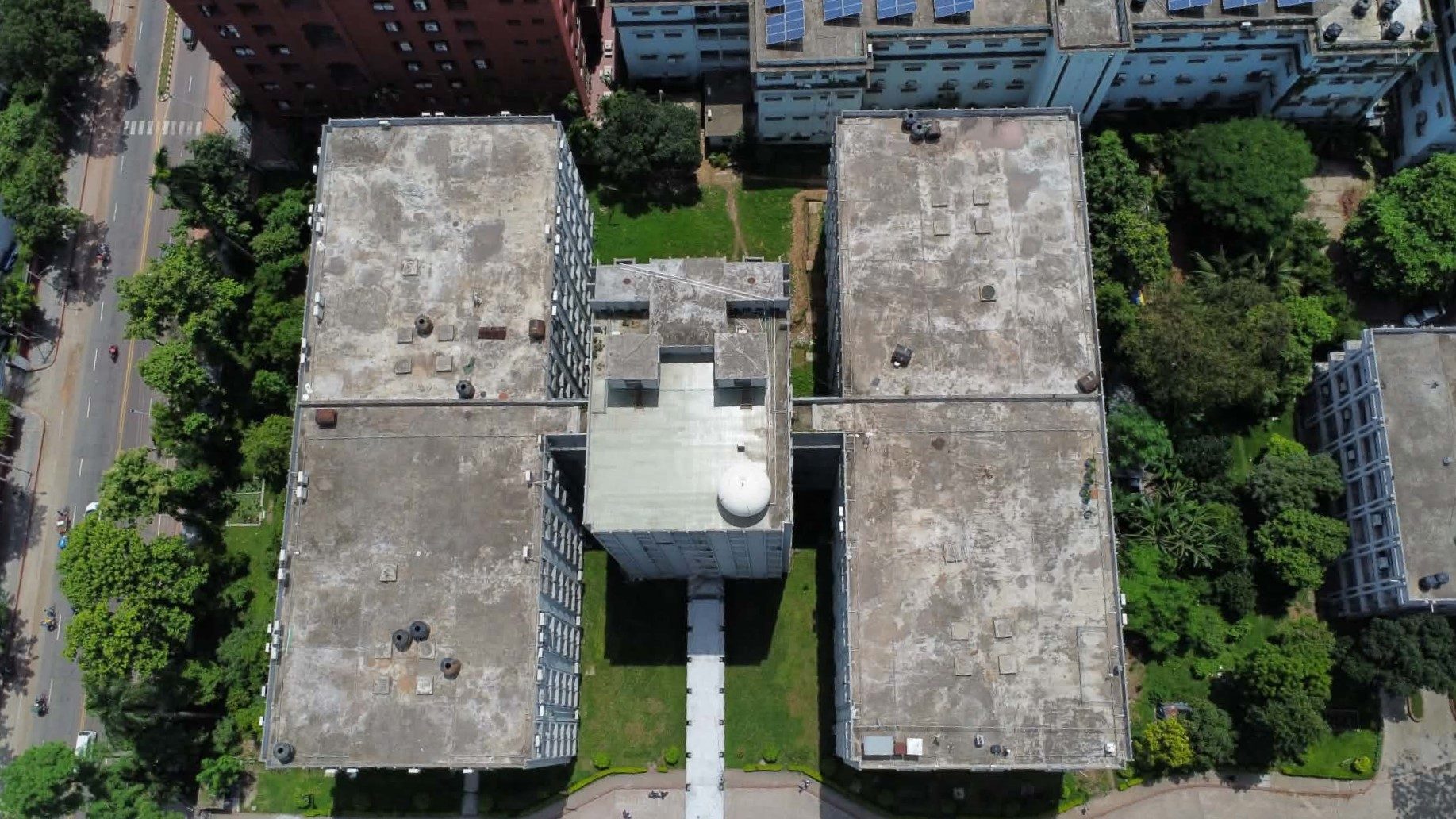
Department of Chemistry · University of Dhaka
Atmospheric and Environmental Chemistry Research Laboratory
We study environmental pollution in Bangladesh.
Particulate matter (PM), black and brown carbon, trace gases,
heavy metals, and organic pollutants.
Our purpose is to study, inform, and educate people about
a better Atmosphere, a better Environment, and
a better Tomorrow!
131
peer-reviewed publications since 2003
44
student theses supervised: 23 MSc, 21 BSc
35
instruments in the laboratory and the field
22
externally funded research projects
From the laboratory
News and events
Event
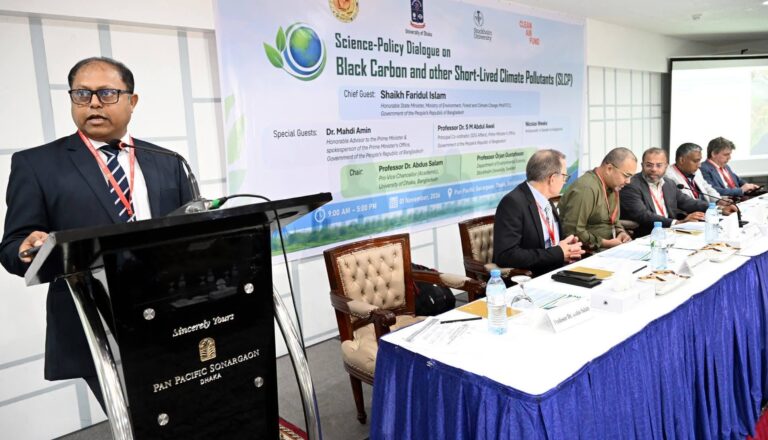
Science-Policy Dialogue on Black Carbon and Short-Lived Climate Pollutants, Dhaka
The University of Dhaka and Stockholm University, with the Clean Air Fund, brought scientists, policymakers and government representatives together on black carbon and other short-lived climate pollutants. Professor Salam co-chaired.
Live
Air quality in Dhaka today
Dhaka US Air Quality Index
129 Unhealthy for sensitive groups
Children, older people and anyone with heart or lung disease should cut back on long or hard exertion outside.
- PM2.5 µg/m³
- 28.0
- Unhealthy for sensitive groups
- PM10 µg/m³
- 31.9
- Good
- NO2 µg/m³
- 0.6
- Good
- O3 µg/m³
- 158.0
- Good
- Haze AOD
- 0.51
- Hazy
- Good: Clean air. A good day to be outside. (appears in the table today)
- Moderate: Fine for most people. The unusually sensitive may want to take it easier outdoors.
- Unhealthy for sensitive groups: Children, older people and anyone with heart or lung disease should cut back on long or hard exertion outside. (appears in the table today)
- Unhealthy: Everyone may start to feel it. Sensitive groups should keep time outdoors short.
- Very unhealthy: A health alert. Everyone is more likely to be affected; stay in where you can.
- Hazardous: Emergency conditions. Everyone should avoid being outside.
Levels in bold appear in today’s readings. Each pollutant is graded on the US EPA scale using its recent average, so a sudden spike can look worse than its colour. Haze has no health scale, so it is described in words.
Data: Copernicus Atmosphere Monitoring Service, via Open-Meteo. Model estimates for 14 November, 14:00 Bangladesh time.
What we work on
The four main strands of our research.
Air quality and particulate matter
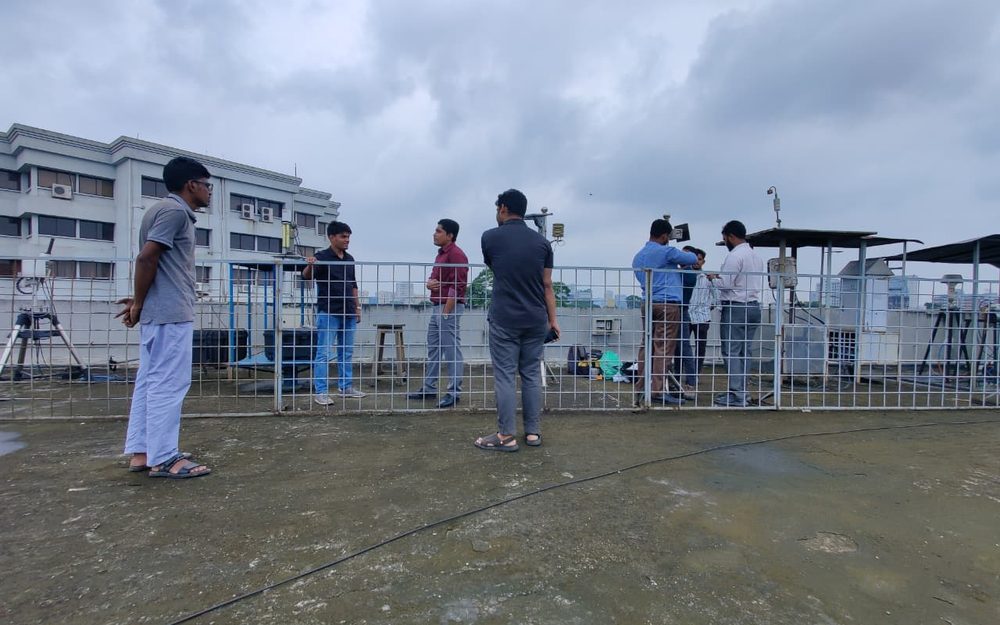
Long-running PM2.5 and PM10 measurement across urban and rural Bangladesh, including filter sampling for a global surface particulate matter network and calibration of low-cost sensor networks.
Emission sources
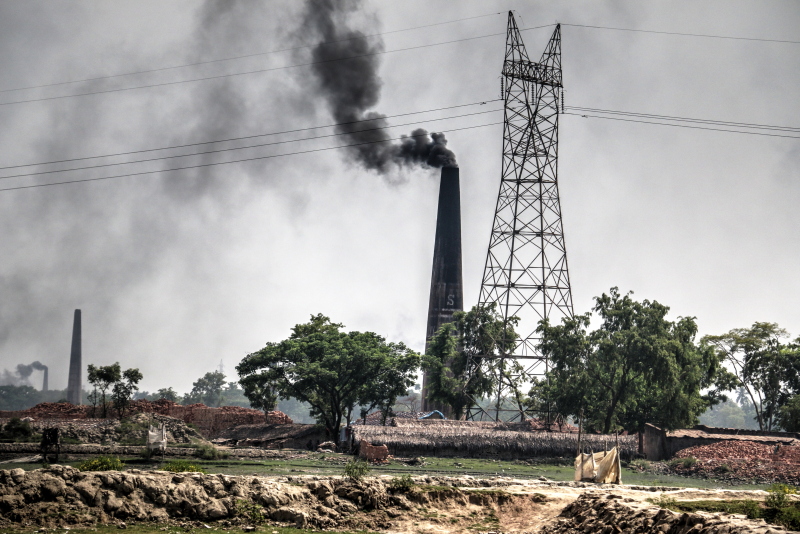
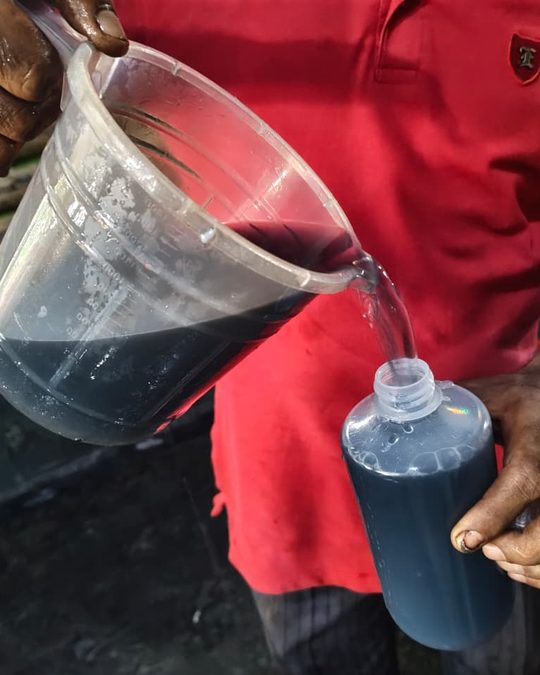
Stack sampling at brick kilns and stationary sources, and the emissions from open burning of municipal solid waste and biomass, measured at the source rather than inferred from the ambient air.
Exposure and health risk
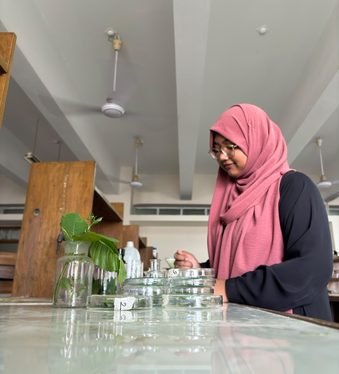
Heavy metals, polycyclic aromatic hydrocarbons and bioaerosols in indoor and personal environments (kitchens, libraries, hospitals and workplaces), and what exposure to them means for health.
Materials for pollutant removal
Synthesis and characterisation of layered double hydroxides and composite adsorbents, and their application to removing chromium(VI), nitrogen dioxide and other pollutants from water and air.
Observatory
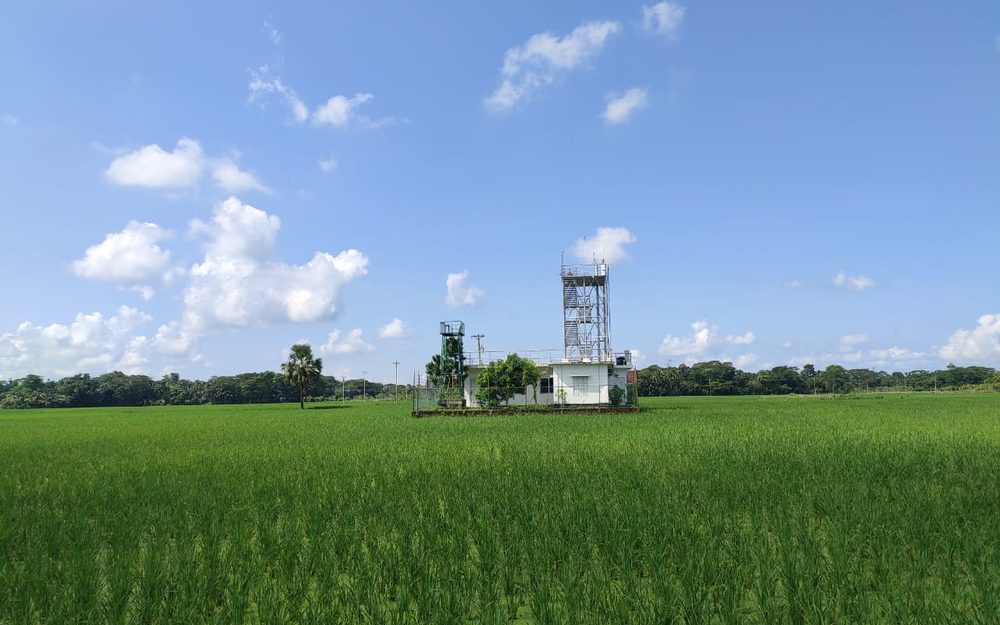
Bangladesh Climate Observatory, Bhola
A rural background station on Bhola island, far from the city. Air coming in from the Bay of Bengal is measured here before it reaches Dhaka, giving a clean baseline to compare the city against.
Latest publications
-
Gravimetrically Measured Water Content of Filter Sampled Fine Particulate Matter at Low Relative Humidity: Insight from the Surface Particulate Matter Network (SPARTAN)
-
Distinct dual-isotopic signatures of major methane sources in South Asia
-
Sustaining low-cost PM2.5 monitoring networks in South-Asian Countries: technical challenges and solutions
The laboratory
AECRL is part of the Department of Chemistry at the University of Dhaka. The laboratory is led by Professor Dr. Abdus Salam, Pro-Vice-Chancellor (Academic) of the University of Dhaka.
The laboratory also trains chemists: 44 MSc and BSc theses have been completed here.