
The air over Bangladesh has usually crossed several countries before it arrives, so most of our work is done with institutions abroad.
- partner countries
- 7
- Canada, Japan, Nepal, Sweden, Taiwan, UK, USA
- funding bodies
- 17
- international projects
- 11
- measurement networks
- 6
Where the work reaches
Dhaka, the cities where Professor Salam studied and worked, and where our co-authors are based.
- Leads the laboratory
- Studied or held a post
- Works with directly
- Shares global network papers
Leads the laboratory
- Dhaka, Bangladesh
- University of Dhaka. BSc and MSc here, then Lecturer through to Professor, Dean of Science, and Pro-Vice-Chancellor. The laboratory is here.
Studied or held a post
- Vienna, Austria
- PhD in atmospheric analytical chemistry, Technical University of Vienna, 2000 to 2003.
- Halifax, Canada
- Postdoctoral researcher in atmospheric science, Dalhousie University, 2003 to 2005.
- Toronto, Canada
- Postdoctoral researcher at the Centre for Atmospheric Chemistry, York University, 2009 to 2010, and Visiting Scholar there 2011 to 2012.
Works with directly
- Stockholm, Sweden
- Örjan Gustafsson, Stockholm University. 6 papers together, 5 of them with fewer than fifteen authors.
- Bengaluru, India
- Krishnakant Budhavant, Indian Institute of Science. 7 papers together, 6 of them with fewer than fifteen authors.
- Islamabad, Pakistan
- Muhammad Fahim Khokhar, National University of Sciences and Technology. 7 papers together, 5 of them with fewer than fifteen authors.
- Albany, United States
- Md Aynul Bari, University at Albany, State University of New York. 4 papers together, every one with a small author list.
Shares global network papers
- Rehovot
- Yinon Rudich, Weizmann Institute of Science. 7 papers together, all of them large multi-institution ones.
- Vancouver, Canada
- Michael Brauer, University of British Columbia. 7 papers together, all of them large multi-institution ones.
- Atlanta, United States
- Yang Liu, Emory University. 4 papers together, all of them large multi-institution ones.
- Kanpur, India
- Sachchida N. Tripathi, Indian Institute of Technology Kanpur. 7 papers together, all of them large multi-institution ones.
- Pretoria, South Africa
- Rebecca M. Garland, University of Pretoria. 6 papers together, all of them large multi-institution ones.
- Seoul, South Korea
- Jhoon Kim, Yonsei University. 4 papers together, all of them large multi-institution ones.
- Melbourne, Australia
- Robyn Schofield, The University of Melbourne. 3 papers together, all of them large multi-institution ones.
- Abu Dhabi, United Arab Emirates
- Diana Francis, Khalifa University. 2 papers together, all of them large multi-institution ones.
The networks the stations belong to
The global networks we measure for, the instrument we run for each, and how long we have been part of it.
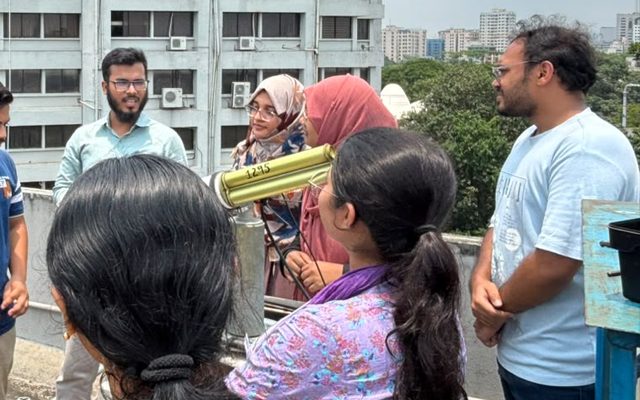
Aerosol Robotic Network (AERONET)
Aerosol optical depth, measured from the ground by a sun photometer: the number satellite retrievals are checked against.
With NASA, USA · National Aeronautics and Space Administration, USA
InstrumentAERONET Sunphotometer
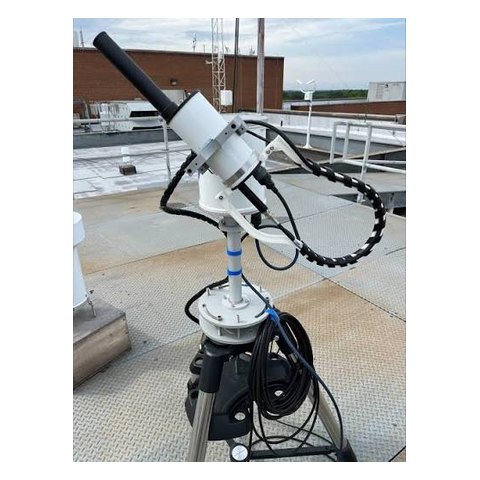
Pandonia Global Network
Nitrogen dioxide, ozone and other trace gases through the whole column of air above the station.
With NASA, USA · National Aeronautics and Space Administration, USA
InstrumentPandora spectrometer
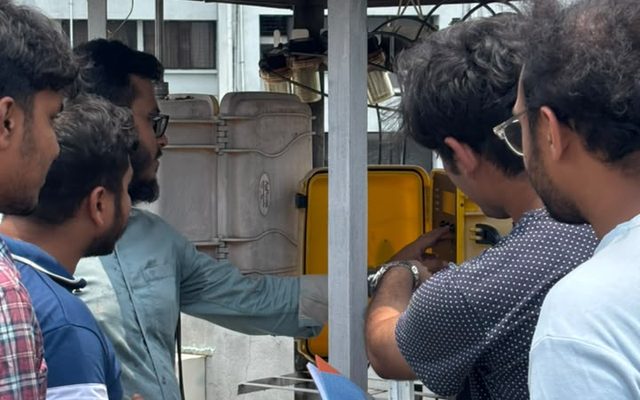
Surface Particulate Matter Network (SPARTAN)
PM2.5 collected on filters and weighed, beside a nephelometer, to evaluate satellite estimates of ground-level particulate matter.
With Clean Air Fund, NSF fund · Dalhousie University, Canada; Washington University, USA
InstrumentAirPhoton
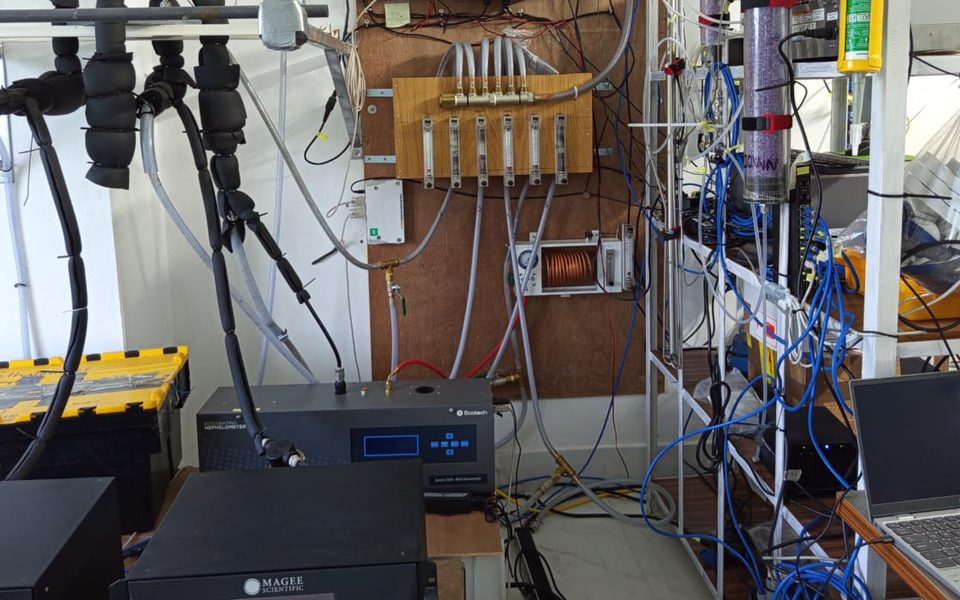
Sweden–Bangladesh black carbon collaboration
Black carbon over Bangladesh, and where it comes from.
With SIDA, Sweden · Stockholm University, Sweden
InstrumentAethalometer
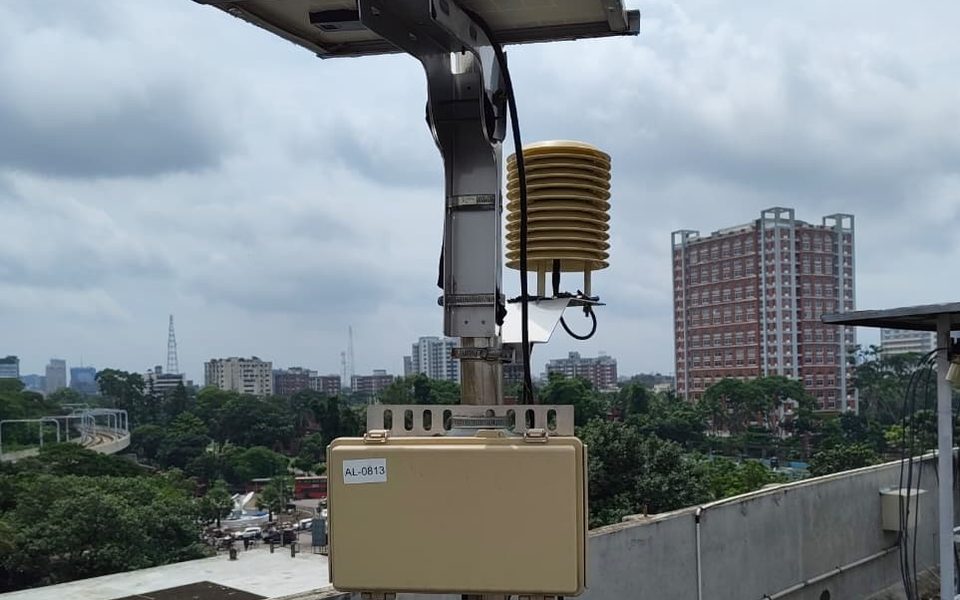
Health Investigation and Air Sensing for Asian Pollution (Hi-ASAP)
PM2.5 in homes, streets and outdoors across Asia with research-grade low-cost sensors, and what that exposure does to health.
With Academia Sinica, Taiwan · Center for Sustainability Science, Academia Sinica
InstrumentAS-LUNG outdoor sensors
Low-cost sensor networks for South Asia
PM2.5 across South Asian cities from networks of low-cost sensors, to inform policy decisions.
With State Department, USA · Duke University & University of Wisconsin-Madison, USA
InstrumentTSI BlueSky sensors
Who funds the work
The funders of our projects. Each links to its project on the timeline.
International 11
In Bangladesh 6
Who the laboratory publishes with
Researchers who appear on several of our papers, with their current institutions.
These are co-authors, not formal institutional partnerships.